Our Story

Why boxing?
Fight Co.Lab began with a simple observation: leadership becomes much clearer when you can experience it, rather than only talk about it.
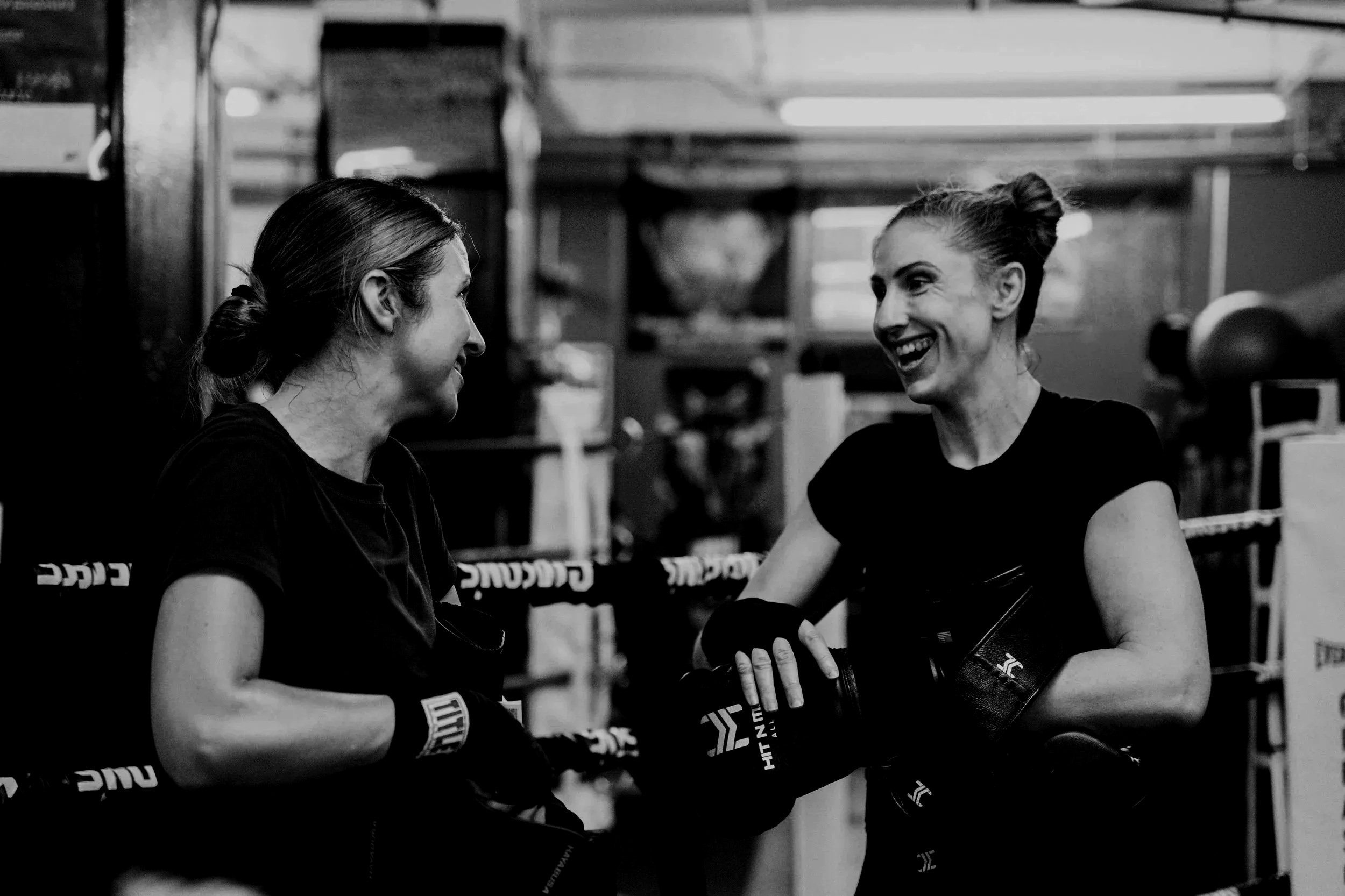
In the boxing ring, pressure is immediate. You notice how you use energy, how you respond when the situation changes, whether you rush, hesitate, overextend, recover, or adapt. The ring makes visible the habits and instincts that are often much harder to see in a meeting room or coaching conversation.
That is what made boxing compelling to us from the beginning. It offered a way to explore leadership as something lived in real time, not just understood intellectually.
How Fight Co.Lab began
Fight Co.Lab grew out of Erin Renzas’s experience as an executive and operator inside fast-growing technology companies.
Across her career, she saw the same tension repeatedly: businesses were asking leaders to navigate more complexity, while many of the models used to identify, develop, and reward leadership were still rooted in older ideas of what strong leadership should look like.
Boxing gave her a different model.
A strong fighter does not simply work harder. They read what is happening, understand timing and distance, adapt in real time, manage energy, and use their strengths deliberately.
That kind of situational intelligence became one of the foundations of Fight Co.Lab.

From the individual to the organization
What began as a way to help individual leaders understand how they operate under pressure quickly opened up a broader question.
If companies need more adaptable, strategic, self-aware leaders, then developing individuals is only part of the answer. Organizations also have to rethink who they identify, develop, promote, and reward.
Today, Fight Co.Lab works at three levels: helping individual leaders sharpen how they lead, executive teams align on how they win, and organizations evolve the leadership capabilities they will need next.
Why the ring still matters
The ring turns abstract leadership concepts into something immediate.
Timing, adaptability, judgment, recovery, confidence, and presence stop being ideas and become observable behaviors.
That creates a different kind of learning. Leaders can see their patterns in real time, understand where those patterns help or limit them, and translate that insight back into the way they lead at work.
You can’t win in someone else’s style.
There is no single way to lead well.
The strongest leaders understand their natural strengths, know how to use them deliberately, and develop enough range to adapt when the situation changes.
The same principle applies to teams and organizations. The goal is not to copy an old model of leadership, but to define the kind of leadership the future actually requires.